التصنيف: Cybersecurity & Compliance

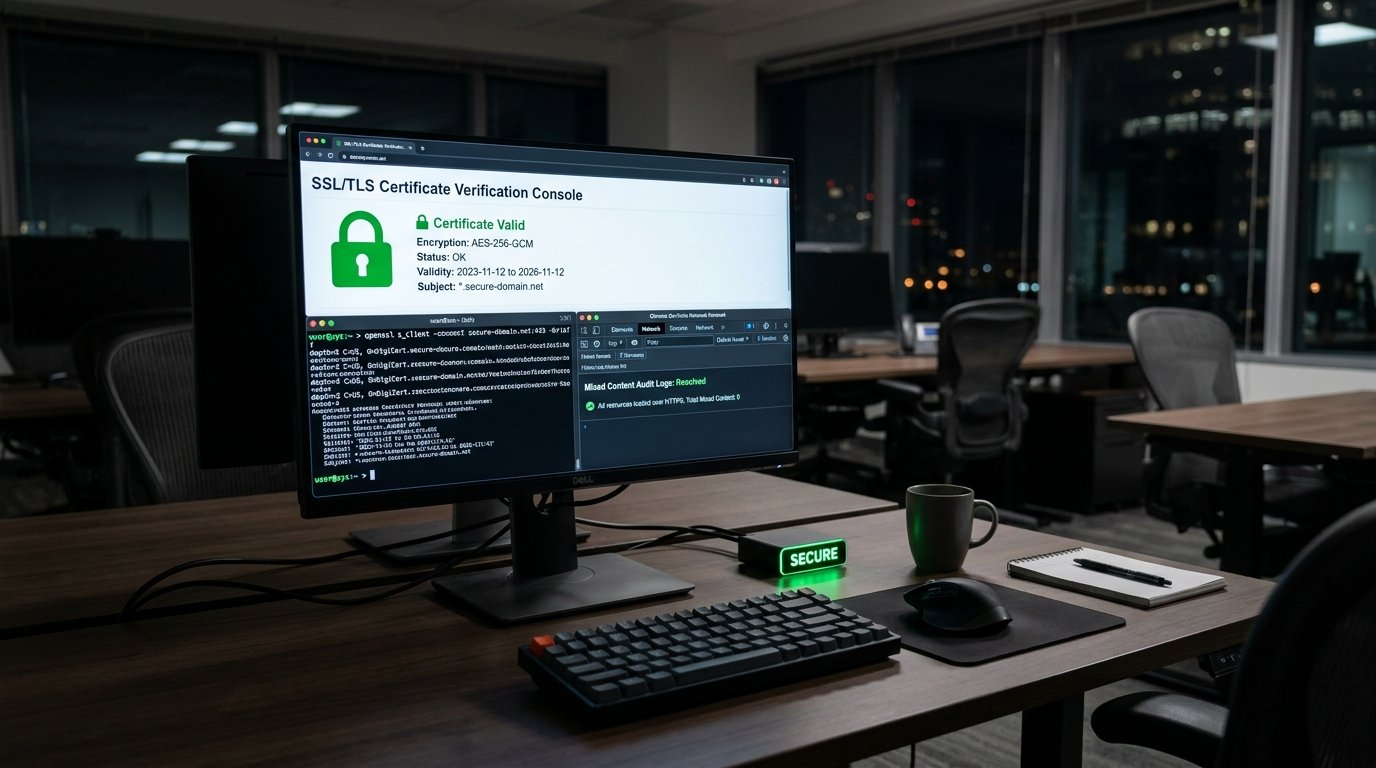
  • How to Install an SSL Certificate and Enable HTTPS: Fixing Mixed Content and TLS Security

    How to Install an SSL Certificate and Enable HTTPS: Fixing Mixed Content and TLS Security

    Every commercial organization must install an SSL certificate to safeguard user data and maintain search engine trust. In fact, modern web browsers flag unencrypted HTTP websites as insecure, deterring prospective clients and destroying credibility. Furthermore, Google treats HTTPS encryption as a fundamental ranking signal across all competitive queries. Therefore, implementing robust Transport Layer Security (TLS) forms an essential prerequisite for enterprise digital operations.

    Selecting and Generating the Appropriate SSL Certificate

    Security architects must choose an SSL certificate tier aligned with their business requirements. While automated Let’s Encrypt certificates provide robust Domain Validation (DV) for standard websites, commercial enterprises often prefer Organization Validation (OV) or Wildcard certificates.

    Generate a 2048-bit or 4096-bit Certificate Signing Request (CSR) directly on your hosting server. Consequently, submit this CSR to your Certificate Authority to receive the validated certificate bundle, private key, and intermediate CA chain.

    In addition, modern cloud environments allow automated certificate renewal via ACME protocols or managed CDN edge certificates, eliminating the risk of unexpected certificate expiration.

    Configuring Web Servers and Enforcing HTTPS Redirection

    Once the certificate files are installed, configure your web server (Apache, Nginx, or LiteSpeed) to enforce modern cipher suites. Specifically, disable obsolete protocols such as SSLv3, TLS 1.0, and TLS 1.1, restricting encryption exclusively to TLS 1.2 and TLS 1.3.

    Furthermore, implement a permanent server-side 301 redirection rule that forces all incoming HTTP requests to resolve over HTTPS. For instance, in an Apache .htaccess file, verify the HTTPS header and redirect traffic before processing application scripts.

    Moreover, enable HTTP Strict Transport Security (HSTS). This HTTP response header instructs browsers to communicate with your domain exclusively over encrypted channels, mitigating man-in-the-middle downgrade attacks.

    Diagnosing and Resolving Mixed Content Warnings

    A frequent complication following SSL activation is the mixed content error. This warning occurs when an encrypted HTTPS page attempts to load unencrypted HTTP assets—such as images, scripts, stylesheets, or external fonts.

    Consequently, web browsers block passive mixed content or display alarming security warnings in the address bar. To resolve this, run database search-and-replace queries to update all internal asset URLs from http:// to https://.

    Additionally, deploy the Content-Security-Policy: upgrade-insecure-requests response header. This instruction automatically instructs modern browsers to request insecure URLs over HTTPS before throwing console errors.

    Review our specialized cybersecurity coordination and audit readiness services to harden enterprise infrastructure. Furthermore, explore our high-speed cloud web hosting and server solutions.

    In conclusion, protecting web infrastructure requires continuous vigilance. By taking the time to install an SSL certificate correctly, eliminate mixed content, and enforce strict TLS headers, companies can guarantee uncompromised security for their visitors.

  • Mobile App & Web Application Security in KSA | Alkhowatir

    Mobile App & Web Application Security in KSA | Alkhowatir

    Hardening mobile app & web application security is an urgent operational imperative for any Saudi business processing corporate records, customer data, and electronic payments. In fact, overlooking application security exposes enterprises to devastating data breaches, regulatory penalties, and lasting reputational damage. Therefore, robust security practices must be engineered into every layer of software development from initial architecture through deployment.

    Core Defensive Measures for Modern Digital Platforms

    • End-to-End Cryptography (TLS 1.3 & AES-256): Ensuring all data in transit and at rest remains fully encrypted against interception.
    • API Hardening & Multi-Factor Authentication: Implementing token-based authentication and rate limiting to neutralize automated attacks.
    • Regular Penetration Testing: Identifying code-level vulnerabilities in accordance with essential cybersecurity controls formulated by the National Cybersecurity Authority (NCA).
    • Least-Privilege Access Controls: Restricting administrative permissions to verified employees based strictly on functional necessity.

    Discover our specialized cybersecurity coordination and audit readiness solutions for Saudi enterprises.

  • Aramco & SABIC Contractor IT Readiness: How to Pass Cybersecurity Audits Seamlessly

    Aramco & SABIC Contractor IT Readiness: How to Pass Cybersecurity Audits Seamlessly

    Achieving Aramco contractor IT readiness is now a mandatory milestone for industrial suppliers across the Kingdom of Saudi Arabia. Therefore, compliance with the Third Party Cybersecurity Standard (SACS-002) is essential to qualify for major energy contracts.

    Comprehensive Aramco contractor IT readiness framework for Saudi industrial vendors

    Why Aramco Contractor IT Readiness Dictates Procurement Success

    Modern industrial supply chains operate in deeply interconnected digital environments. Consequently, energy operators view contractor workstations and cloud services as critical extensions of their own perimeter. Furthermore, an unpatched vulnerability in vendor systems could jeopardize vital energy infrastructure. As a result, procurement officers rigorously inspect cybersecurity compliance before awarding major tenders.

    The Four Pillars of Contractor Cybersecurity Compliance

    1. Multi-Factor Authentication and Network Segregation

    Enterprise guidelines require multi-factor authentication across all remote access portals and administrative tools. In addition, sensitive project networks must remain strictly isolated from public office Wi-Fi. Therefore, unauthorized lateral movement is prevented throughout the corporate infrastructure.

    2. Domain-Authenticated Corporate Communications

    Procurement departments routinely disqualify bids submitted through generic public webmail services. Consequently, contractors must implement domain-branded corporate email backed by strict SPF, DKIM, and DMARC enforcement. Moreover, authenticated communication protects commercial invoices from sophisticated email spoofing attacks.

    3. Endpoint Detection and Vulnerability Hygiene

    Every operational device must maintain managed Endpoint Detection and Response software. In addition, IT managers must document systematic patch management cycles consistent with national guidance from the National Cybersecurity Authority (NCA). Consequently, critical operating system vulnerabilities are resolved before audits begin.

    4. Air-Gapped Backups and Disaster Recovery Drills

    Contractors must maintain regular, encrypted backups of critical project data. Furthermore, preserving an immutable copy disconnected from the primary network defends against modern ransomware threats. As a result, businesses can recover quickly without catastrophic operational downtime.

    Securing Long-Term Vendor Prequalification

    Achieving full compliance requires proactive preparation and structured technical remediation. Therefore, running a pre-audit gap assessment accelerates formal approval while preventing expensive bid disqualifications. Ultimately, proven Aramco contractor IT readiness builds enduring trust with major industrial operators across Jubail, Dammam, and Al Khobar.

    The team at Alkhowatir Al-Jazira delivers specialized guidance through our contractor readiness services and cybersecurity coordination solutions for Aramco and SABIC contractors in the Eastern Province. Contact us today to schedule a technical readiness consultation.

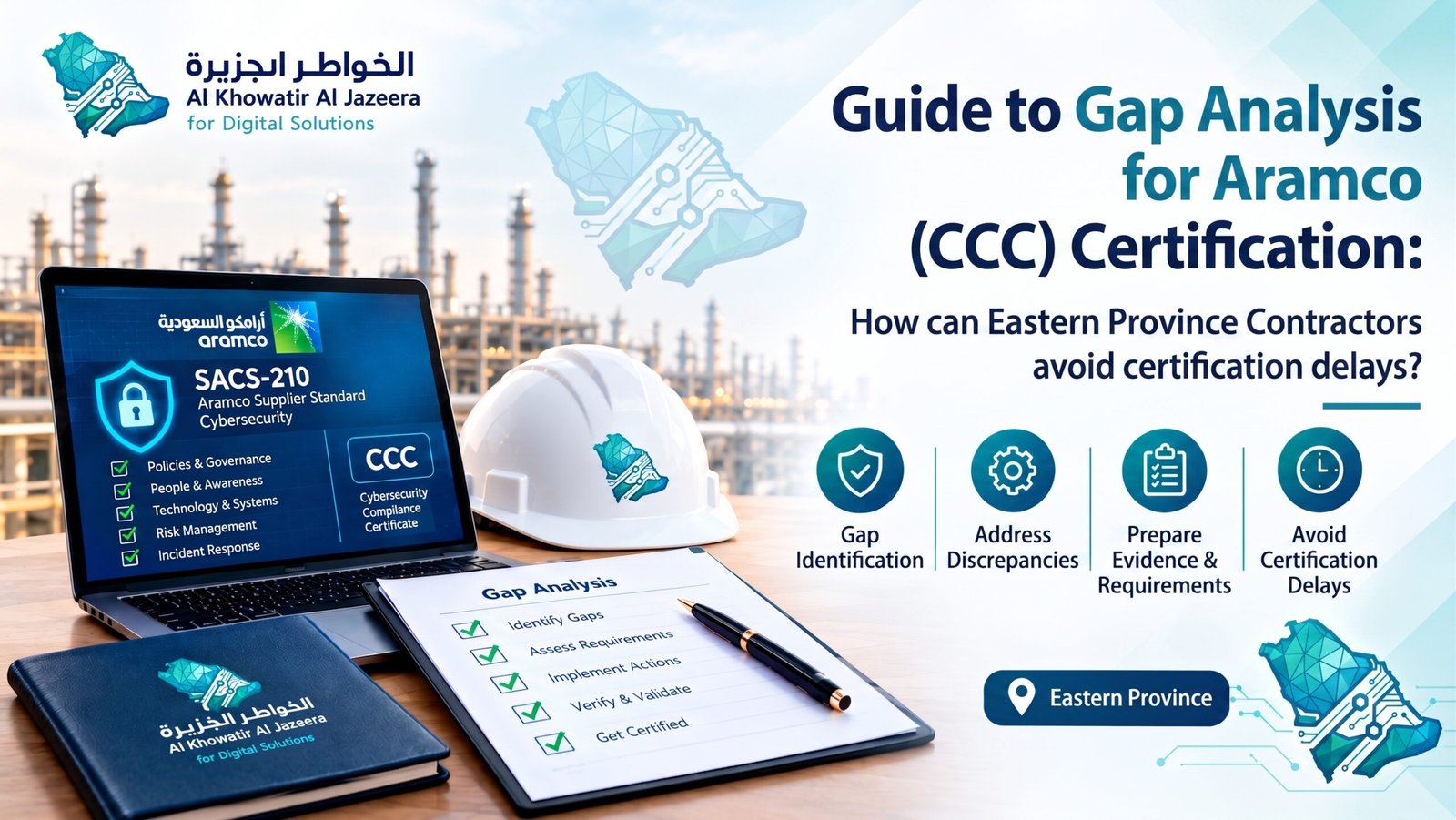
  • Aramco CCC Gap Analysis Guide: How Eastern Province Contractors Avoid Audit Delays

    Aramco CCC Gap Analysis Guide: How Eastern Province Contractors Avoid Audit Delays

    In the Eastern Province—specifically across Jubail, Dammam, and Khobar—securing the Aramco Cybersecurity Compliance Certificate (CCC) is an absolute operational requirement. Consequently, valid certification is mandatory to bid on contracts and participate in major energy projects.

    Under the revised SACS-210 standard, audit requirements have become substantially more stringent. Therefore, attempting an audit without rigorous gap analysis frequently leads to costly delays. In addition, failed assessments can disrupt ongoing operations for months.

    1. What Is an Aramco SACS-210 Gap Analysis?

    A gap analysis is an exhaustive diagnostic review comparing your existing security controls against Aramco’s framework. As a result, this evaluation uncovers technical vulnerabilities before external auditors arrive. Furthermore, early detection provides ample time to rectify deficiencies calmly and systematically.

    2. Why Contractors Fail Initial Audits

    Field experience shows that audit delays stem from predictable technical oversights. For example, missing documented evidence and unverified system logs represent the most frequent audit findings.

    Moreover, inadequate access controls and weak encryption policies trigger immediate non-compliance notices. In contrast, accredited third-party evaluators require concrete proof of daily technical enforcement.

    3. Practical Methodology for Compliance

    Achieving SACS-210 certification requires a disciplined four-stage implementation strategy:

    • Step 1 (Scoping): Accurately inventory every workstation, server, and network device connecting to Aramco data. Specifically, incorrect scoping causes the majority of assessment delays.
    • Step 2 (Control Assessment): Review firewall configurations, endpoint protection, and encryption protocols. In addition, ensure your organization utilizes secure official domain email architecture.
    • Step 3 (Evidence Collection): Gather genuine audit logs and automated vulnerability scan reports. Consequently, the credibility of your documentation determines your assessment score.
    • Step 4 (Remediation Plan): Formulate an actionable roadmap to address identified gaps before scheduled third-party auditing.

    4. Strengthening Commercial E-E-A-T and Market Trust

    In B2B industrial contracting, cybersecurity compliance functions as a powerful trust accelerator. Therefore, certified contractors enjoy distinct competitive advantages during major vendor selections.

    Ultimately, verified compliance demonstrates proven operational resilience. As a result, your organization establishes itself as a preferred supplier for top-tier energy operators.