التصنيف: SEO & Search Marketing

  • SEO Keyword Research and Keyword Mapping for Saudi B2B Businesses

    SEO Keyword Research and Keyword Mapping for Saudi B2B Businesses

    A recurring challenge observed in corporate search engine optimization (SEO) initiatives in Saudi Arabia is the disconnect between keyword research and site architecture. Many teams assemble broad lists of commercial keywords from third-party tools and distribute them across blog posts without a defined architectural framework. Without structured intent mapping, this approach often leads to fragmented internal signals, where multiple pages target overlapping topics and diffuse topical authority across the domain.

    In the Saudi business-to-business (B2B) ecosystem and technical services sector, organic search performance is rarely evaluated by traffic volume alone. Commercial value is driven by connecting with corporate decision-makers, procurement leads, and project managers when they are researching specific capabilities or preparing requests for proposals (RFQs). This guide provides an evidence-based approach to SEO keyword research for Saudi businesses and developing an actionable keyword map: from gathering first-party search queries and classifying B2B search intent, to mapping terms across URL tiers, using Google Search Console as a diagnostic tool, and maintaining content architecture over time.

    What Is a Keyword Map and Why Is It Foundational to Your Digital Architecture?

    A keyword map is a structured architectural framework—commonly documented in a spreadsheet—that assigns each published URL on your domain a primary topic focus and an aligned set of secondary, semantic search queries. In corporate web architecture, an effective keyword map fulfills three essential operational functions:

    • Establishing Clear Thematic Ownership: It designates a primary destination page for each core search intent, preventing overlapping pages from dividing internal link equity and user attention.
    • Governing Information Architecture: It dictates the appropriate content format based on searcher intent (determining whether a query requires an executive service landing page, a technical specification sheet, or an educational guide).
    • Guiding Contextual Internal Linking: It provides a clear reference for internal linking, ensuring supporting articles direct visitors and search engines toward relevant, high-intent service pages using natural, descriptive anchor text.

    Phase 1: Discovering High-Intent B2B Keywords from Authoritative Data Sources

    Effective keyword research in the Saudi enterprise landscape avoids generic assumptions, relying instead on authoritative, first-party data sources:

    1. Mining First-Party Google Search Console (GSC) Data

    If your website has been active for several months, Google Search Console provides the most reliable record of actual search visibility. In the Performance Report, apply a country filter set to Saudi Arabia to isolate domestic demand. Examine search queries that generate steady impressions but currently show lower click-through rates (CTR) or average positions on lower page-one or page-two results. These queries highlight topics where search engines already recognize your domain’s relevance, indicating opportunities to improve content depth, clarify intent alignment, and strengthen internal linking.

    Understanding GSC Data Limitations: Search Console is an invaluable first-party diagnostic tool, but it should not be treated as an exhaustive census of all search demand in a market. According to Google Search Central documentation, GSC only records queries where your site actually generated an impression. Furthermore, to protect user privacy, Google omits anonymized queries (queries searched by very few users) from the query breakdown table, and the web interface truncates reports (typically displaying up to 1,000 rows). Consequently, query table metrics will not equal total site impressions and should be interpreted as an authoritative sample of demonstrated visibility rather than complete market demand.

    2. Auditing Inquiries, RFQs, and Enterprise Tenders

    In Saudi B2B commerce—such as industrial contracting, logistical supply chains, or engineering consultancy—buyers frequently search using specialized administrative, regulatory, and procurement terminology that third-party keyword tools often categorize as “zero search volume.” Reviewing actual client inquiries submitted through contact forms, official business correspondence, and government tender specifications across Riyadh, Jeddah, and the Eastern Province provides valuable qualitative insight. Inquiries referencing technical compliance, enterprise integrations, or local hosting standards represent high-intent commercial topics that attract qualified business prospects despite modest query counts.

    3. Addressing Bilingual and Nuanced Terminology in Saudi Arabia

    Search behavior across Saudi enterprises exhibits dual linguistic dynamics that should be reflected in your keyword mapping:

    • Modern Standard Arabic & Official Terminology: Professional executive queries (e.g., تصميم المواقع المؤسسية، استشارات تقنية، حلول إدارة السيرفرات).
    • Informal Decision Queries & Practical Formulations: Practical search formulations frequently used in preliminary research (e.g., كم تكلفة، وش أفضل، متطلبات ربط).
    • English & Transliterated Technical Language: Common in engineering, IT, and specialized B2B procurement where corporate teams and multinational specialists search directly in English (e.g., B2B CRM integration, Cloudflare enterprise caching, ISO 27001 readiness).

    For bilingual websites, maintain separate Arabic and English mapping sheets to reflect the genuine search patterns of each audience rather than relying on direct, literal translations.

    Phase 2: Classifying B2B Search Intent Across the Buying Funnel

    Before assigning any search query to a specific URL, classify its underlying search intent. Aligning content with intent ensures visitors find the exact level of information they need: a user looking to request a corporate proposal will disengage from a general introductory article, while someone researching technical concepts is unlikely to convert on a bare sales contact form. Structuring content to match intent improves user engagement and conversion efficiency.

    (Note: The queries, intent stages, and page types shown in the table below are illustrative operational examples representing common B2B search scenarios, rather than statistically measured national search volumes.)

    Search Intent Tier What the Searcher Seeks Illustrative Saudi B2B Query Example Recommended URL Page Type
    Informational (ToFu) Understanding a concept, troubleshooting a technical issue, or reviewing industry regulations What is Interaction to Next Paint? / ZATCA Phase 2 technical requirements Educational Blog Post / In-Depth Technical Guide
    Commercial Investigation (MoFu) Comparing platforms, evaluating service models, or reviewing agency selection criteria Custom Web Development vs CMS / How to evaluate a corporate web agency Technical Comparison Guide / Industry Evaluation Case Study
    Transactional (BoFu) Ready to initiate contact, request an RFQ, or contract an agency Corporate web design company Riyadh / Cloud hosting services KSA Core Service Landing Page (with RFQ form)
    Navigational Seeking a specific corporate entity, brand portal, or client login directly Alkhowatir Al Jazeera contact / Alkhowatir web services Homepage or Official Contact Page

    Phase 3: The Architecture of an Actionable B2B Keyword Map

    An actionable keyword map organizes URLs into logical tiers, preventing content duplication and establishing clear topical hierarchy across your site.

    (Note: The URLs and query clusters in the following matrix are illustrative examples demonstrating how a B2B digital consultancy structures internal page responsibilities; they do not represent commercial guarantees or regulatory endorsements.)

    Target Destination URL (Example) Page Type Primary Target Topic Secondary & Semantic Query Examples Funnel Alignment
    /en/services/web-design Core Service Page Corporate Web Design in Saudi Arabia Enterprise portal development, B2B website design Riyadh, custom corporate web coding Bottom of Funnel (BoFu – Transactional)
    /en/services/hosting Core Service Page Cloud Web Hosting in Saudi Arabia Managed cloud servers, in-kingdom data residency, enterprise secure hosting Bottom of Funnel (BoFu – Transactional)
    /website-maintenance-cost... Industry Guide Website Maintenance in Saudi Arabia Web support retainers KSA, website maintenance SLA benchmarks, corporate support cost factors Middle of Funnel (MoFu – Evaluation)
    /how-to-configure-cloudflare... Technical Article Configure Cloudflare for Saudi Websites Cloudflare DNS caching, website speed optimization, edge security mitigation Top of Funnel (ToFu – Informational)

    Copyable B2B Keyword Mapping Spreadsheet Template

    To implement this framework in your organization, copy the structured template below into Google Sheets or Microsoft Excel. Each URL listed is an illustrative placeholder demonstrating proper classification:

    Target URL (Placeholder),Page Type,Search Intent Tier,Primary Focus Keyword,Secondary & Semantic Queries,Recommended Anchor Text,GSC Query Status,Action Plan
    /services/placeholder-service,Core Service Page,BoFu (Transactional),Enterprise IT Solutions Saudi Arabia,B2B digital services Riyadh; cloud infrastructure KSA,enterprise IT solutions,Single URL Ranking,Maintain content freshness & monitor
    /blog/placeholder-technical-guide,In-Depth Guide,MoFu (Evaluation),Enterprise Cloud Architecture Review,Cloud migration criteria; hosting benchmarks KSA,cloud architecture benchmarks,Multi-URL (Investigating),Differentiate intent & inspect canonicals
    /blog/placeholder-explainer,Educational Post,ToFu (Informational),What is ZATCA Phase 2 Compliance,ZATCA e-invoicing architecture; technical requirements,introductory regulatory overview,Single URL Ranking,Link to service page with descriptive text
    /placeholder-contact,Contact Page,Navigational,Brand Name Contact Saudi Arabia,Corporate headquarters Riyadh; official RFQ inquiries,contact official team,Single URL Ranking,Maintain accurate corporate address & hours
    

    Standard Column Definitions for Your Team:

    • Target URL (Placeholder): The definitive canonical URL designated to own the search topic (labeled as a placeholder until published).
    • Page Type: The architectural template (Core Service, Product Page, Educational Guide, Industry Case Study, Contact).
    • Search Intent Tier: Funnel stage (ToFu: Informational, MoFu: Commercial/Evaluation, BoFu: Transactional, Navigational).
    • Primary Focus Keyword: The single overarching search topic the page is engineered to address.
    • Secondary & Semantic Queries: Closely related supporting phrases, technical variants, and localized synonyms naturally integrated into subheadings and body copy.
    • Recommended Anchor Text: Natural, descriptive phrasing to be used when other internal pages link to this URL.
    • GSC Query Status: Observed diagnostic state in Search Console (e.g., Single URL, Multi-URL Under Investigation).
    • Action Plan: The operational next step (e.g., Maintain & Monitor, Differentiate Intent, Evaluate 301 Consolidation).

    Phase 4: Investigating Multi-URL Query Performance in Google Search Console

    In Google search results, having more than one URL from your domain appear for a given search query is not an automatic penalty and does not indicate algorithmic confusion. As documented by Google Search Central, search engines evaluate queries dynamically, and displaying multiple pages can occur naturally when a site provides comprehensive coverage across different facets of a subject.

    However, when reviewing query performance in Google Search Console, seeing multiple URLs for a single term serves as a valuable diagnostic indicator to investigate whether content is unintentionally overlapping or dividing user engagement.

    Step-by-Step Diagnostic Routine in Search Console:

    1. Navigate to the Performance Report in Google Search Console.
    2. Apply a filter on Query, entering the core search phrase under examination (e.g., cloud hosting Saudi Arabia).
    3. Switch to the Pages tab while keeping the query filter active to view all URLs that recorded impressions.
    4. Evaluate Search Intent and Content Purpose: Compare the purpose of each appearing URL. If URL A is a high-level educational guide and URL B is a specialized service page, evaluate whether this distribution serves users appropriately or if searchers are landing on an unoptimized stage of the funnel.
    5. Analyze Performance Trends Over Time: Review historical data over a 3- to 6-month window. Determine whether impressions are steadily migrating toward a newly updated URL, or whether both pages consistently split visibility without either establishing strong organic engagement.
    6. Inspect Indexing and Canonical Signals: Use the URL Inspection Tool in GSC for each page. Check the “User-declared canonical” and “Google-selected canonical” fields to ensure that search engines have not chosen an alternative canonical or identified conflicting indexing signals.

    Evidence-Based Strategies for Content Differentiation and Consolidation:

    • Case-by-Case Content Consolidation (301 Redirects): If two pages serve essentially identical user intent (such as two historical articles covering the same topic with outdated data), consider consolidating the best analysis into the stronger URL and implementing a 301 permanent redirect from the secondary page. Redirects should be evaluated individually rather than applied as a blanket rule, ensuring that neither page has unique operational or historical value.
    • Intent Differentiation and Content Refinement: When both pages serve distinct business needs, update their headings, introductory copy, and topic focus to create clear conceptual boundaries. Ensure the informational article focuses on comprehensive conceptual explanations, while directing conversion-focused commercial queries toward the dedicated service landing page.
    • Natural, Descriptive Internal Linking: Use natural, contextually relevant internal links to guide visitors between related pages. Avoid rigid or repetitive exact-match commercial anchors across blog posts; instead, write clear, descriptive anchor text that naturally informs both users and search engines about the destination page’s focus.

    Phase 5: Ongoing Keyword Map Maintenance and Performance Monitoring

    A B2B keyword map is an operational planning document that evolves alongside business services and search trends. It is important to distinguish established search engine mechanics from general strategic recommendations: creating a keyword map does not on its own guarantee higher organic rankings, which remain subject to domain authority, backlink quality, competitive landscape, and overall technical performance. Rather, it provides an organized foundation for monitoring and optimization.

    Recommended ongoing maintenance practices include:

    1. Identifying Emerging Queries in Search Console: Periodically review GSC query reports to identify newly rising search terms where your site has begun accumulating impressions organically. Determine whether these terms are best supported by expanding existing pages or creating focused new resources.
    2. Auditing Content Freshness: B2B sectors in Saudi Arabia frequently update regulations, compliance guidelines, and technical standards. Schedule regular reviews to verify that technical figures, dates, and references remain accurate and current.
    3. Refining Based on Conversion Insights: Track user interactions and inquiries through analytics and CRM data. Identify which mapped topics deliver qualified procurement inquiries, allowing you to prioritize development for topics with demonstrable commercial impact.

    For organizations seeking professional assistance in structuring their search presence, exploring our dedicated SEO services in Saudi Arabia or consulting on corporate web design and development can provide tailored architectural guidance. If you require a detailed evaluation of your digital visibility, feel free to contact our technical consulting team.
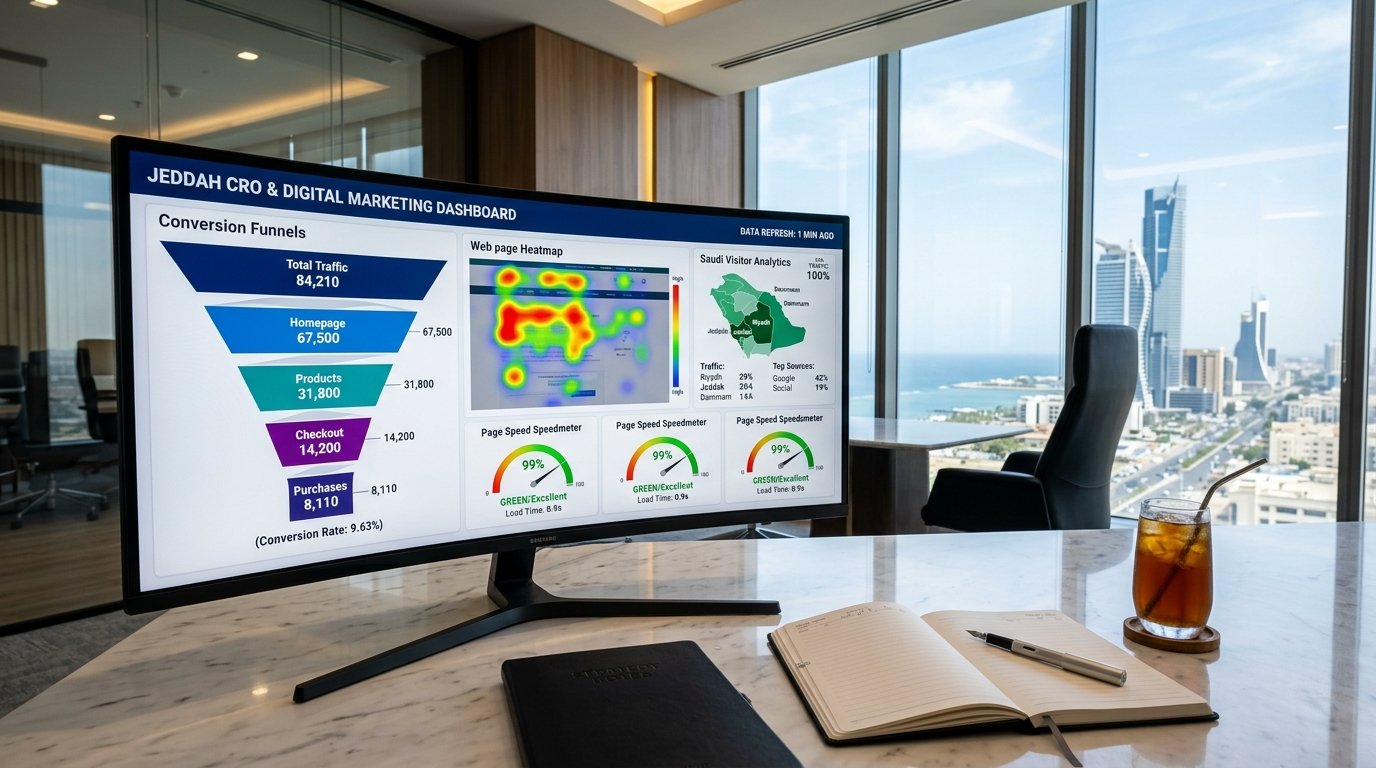

  • How to Boost SERP CTR in Google: Click-Worthy Title Tags, Meta Snippets, and Rich Enhancements

    How to Boost SERP CTR in Google: Click-Worthy Title Tags, Meta Snippets, and Rich Enhancements

    Executing systematic SERP CTR optimization is the fastest method to amplify organic website traffic without waiting months for keyword rank increases. In fact, ranking in the top five search results produces minimal business value if prospective clients consistently click competing listings. Furthermore, Google algorithms incorporate user engagement signals to validate search satisfaction. Therefore, optimizing your titles and meta snippets directly drives commercial growth.

    Engineering High-Converting and Compelling Title Tags

    Your SEO title tag acts as your round-the-clock digital advertisement on Google search pages. In fact, compelling titles address search intent directly while triggering psychological curiosity and urgency.

    Consequently, place your primary focus keyphrase near the beginning of the title where users scan first. Support your keyphrase with compelling value propositions (such as comprehensive guides, verified pricing, or expert benchmarks). Keep title length between 45 and 60 characters to prevent awkward truncation on mobile viewports.

    Crafting Persuasive and Informative Meta Descriptions

    While meta descriptions do not directly influence algorithmic ranking positions, they heavily dictate user click-through propensity. Avoid generic, dry descriptions that merely restate page headlines.

    Instead, summarize the tangible benefit readers will gain within 120 to 155 characters. End your meta description with an explicit, frictionless call-to-action encouraging users to explore your authoritative analysis.

    Securing Rich Snippets and Visual SERP Features

    Visual enhancements dramatically distinguish your listings from adjacent plain-text competitors. Deploy Schema.org FAQPage, HowTo, and Review markup to capture expanded vertical SERP real estate.

    In addition, monitor query impression data in Google Search Console to identify high-impression keywords with low click-through rates. Prioritizing SERP CTR optimization on these opportunities yields immediate traffic gains.

    Explore our specialized conversion rate and CTR search optimization services. Additionally, discover our bespoke website design and UI/UX development solutions.

    Ultimately, search traffic is determined by clicks, not mere impressions. By implementing disciplined SERP CTR optimization, your enterprise captures maximum market share from existing rankings and accelerates organic growth.

  • How to Audit AI Content for Google E-E-A-T and Helpful Content Updates: Quality Control Guide

    How to Audit AI Content for Google E-E-A-T and Helpful Content Updates: Quality Control Guide

    Learning how to audit AI content for EEAT compliance has become a critical operational capability for content teams and marketing executives. In fact, while artificial intelligence dramatically accelerates writing output, raw machine text frequently lacks original insights, verified facts, and authentic perspective. Furthermore, Google’s Helpful Content systems aggressively demote generic, mass-produced text. Therefore, establishing a rigorous human review protocol ensures algorithmic safety and editorial prestige.

    Verifying First-Hand Experience and Demonstrable Human Depth

    The first E in Google’s E-E-A-T framework stands for Experience, which AI models fundamentally cannot possess. In fact, language models synthesize existing internet text rather than testing software, auditing servers, or managing real commercial projects.

    Consequently, infuse every article with proprietary case data, real-world engineering anecdotes, and direct client outcomes. Grounding conceptual advice in practical, first-hand evidence establishes instant credibility with readers and algorithmic raters alike.

    Ruthless Fact-Checking and Eliminating Algorithmic Hallucinations

    Generative models frequently invent citations, misstate regulatory statutes, or miscalculate technical statistics with plausible confidence. Publishing unverified claims inflicts catastrophic damage on corporate reputation.

    Therefore, mandate line-by-line editorial fact verification for every technical specification, law, and statistic mentioned. Cross-referencing statements against primary source documentation guarantees factual integrity.

    Showcasing Transparent Author Credentials and Editorial Standards

    Search engines scrutinize who authored digital content, particularly within technical, financial, and legal sectors. Accompany publications with detailed author biographies showcasing relevant industry credentials and educational backgrounds.

    In addition, publish transparent editorial policy statements outlining how your organization employs AI assistance. Taking the initiative to audit AI content for EEAT protects your search rankings from automated penalties.

    Discover our specialized enterprise content optimization and SEO auditing services. Additionally, review our corporate web design and software engineering solutions.

    In conclusion, automated efficiency must never supersede quality. By taking decisive measures to audit AI content for EEAT, your enterprise produces authoritative thought leadership that earns high search rankings and commands client trust.

  • How to Implement Multilingual SEO with Hreflang Tags for Saudi Enterprise Portals Without Errors

    How to Implement Multilingual SEO with Hreflang Tags for Saudi Enterprise Portals Without Errors

    Implementing multilingual SEO with hreflang annotations correctly is vital for enterprises operating bilingual digital platforms in Saudi Arabia. In fact, corporate audiences in the Kingdom comprise both Arabic-speaking domestic leaders and multinational English-speaking stakeholders. Furthermore, misconfigured language tags cause Google to index incorrect linguistic versions or flag pages as duplicate content. Therefore, following a strict technical implementation framework guarantees flawless bilingual indexing.

    The Golden Rule of Bidirectional Reciprocal Hreflang Tags

    The single most common error in multilingual search engineering is missing return links. If an Arabic page indicates that an English equivalent exists, the English page must explicitly link back to the Arabic version.

    Without this reciprocal confirmation, search engines ignore the annotations entirely to prevent third-party spoofing. Consequently, automate hreflang tag injection within your CMS templates to ensure that paired URLs reference each other reciprocally on every single render.

    Configuring Region-Specific Language Codes and x-default

    Use precise ISO 639-1 language codes combined with ISO 3166-1 Alpha-2 country codes. In Saudi Arabia, designate ar-SA for Arabic content and en-SA for English content targeted at the Kingdom.

    In addition, include an x-default tag pointing to your primary language fallback. This designation instructs search engines which linguistic version to display to users from untargeted geographical regions.

    Maintaining Canonical URL Alignment and Sitemap Integration

    Never point a canonical tag from one language version to another. Each linguistic page must feature a self-referencing canonical tag pointing directly to its own absolute URL.

    Moreover, publish bilingual XML sitemaps that embed hreflang XHTML links directly into sitemap feeds. Mastering multilingual SEO with hreflang protects organic equity and delivers localized user experiences.

    Explore our specialized multilingual SEO and technical search architecture services. In addition, explore our bilingual corporate web design and development solutions.

    Ultimately, bilingual harmony requires engineering precision. By executing flawless multilingual SEO with hreflang, your enterprise projects international stature while commanding local organic search across all target demographics.

  • Internal Linking Architecture, Content Silos, and PageRank Distribution: Strategic Technical Guide

    Internal Linking Architecture, Content Silos, and PageRank Distribution: Strategic Technical Guide

    Mastering internal linking and silo architecture is among the most underutilized yet powerful levers in technical search engine optimization. In fact, while external backlinks provide raw domain equity, your internal link graph dictates how that authority flows to high-value commercial landing pages. Furthermore, unstructured linking confuses search crawlers and dilutes topical focus. Therefore, designing a disciplined content silo architecture guarantees maximum algorithmic impact.

    The Mechanics of Internal PageRank Distribution

    Every inbound link passes authority into your domain, typically entering through your homepage or high-performing viral articles. However, without a deliberate internal link strategy, this equity dissipates into low-value administrative pages.

    Consequently, map priority commercial URLs and ensure they receive authoritative contextual links from relevant informational guides. Strategic link distribution channels ranking power directly to conversion-focused assets.

    Engineering Strict Content Silos to Reinforce Topical Focus

    Content siloing organizes a website into isolated, thematic sections where pages within a specific category link primarily to each other. For example, articles regarding cloud infrastructure should link comprehensively within the hosting category before referencing unrelated subjects.

    This structural isolation prevents thematic cross-contamination and signals unambiguous topical authority to search engine crawlers evaluating topical depth.

    Descriptive Anchor Text Diversity and Eliminating Orphan Pages

    Avoid generic anchor text phrases like click here or learn more. Instead, craft descriptive, keyword-rich anchor text that clearly informs search engines and users about the destination topic.

    Furthermore, perform regular crawls to identify and eliminate orphan pages that lack inbound internal references. Perfecting internal linking and silo architecture elevates organic rankings across your entire catalog.

    Discover our specialized technical SEO and internal link engineering services. Additionally, review our enterprise website design and information architecture solutions.

    In conclusion, internal links represent the circulatory system of your website’s search performance. By implementing disciplined internal linking and silo architecture, your enterprise accelerates indexing and unlocks untapped organic potential.

  • Technical Guide to Optimizing Interaction to Next Paint (INP) for Superior Core Web Vitals

    Technical Guide to Optimizing Interaction to Next Paint (INP) for Superior Core Web Vitals

    Mastering technical SEO for INP optimization is essential for maintaining top-tier organic rankings and responsive user experiences. In fact, Interaction to Next Paint (INP) has permanently replaced First Input Delay (FID) as Google’s official Core Web Vitals responsiveness metric. Furthermore, while FID measured only initial input delay, INP evaluates every click, tap, and keypress throughout the user’s entire page visit. Therefore, diagnosing and resolving main-thread bottlenecks is critical.

    Understanding the Three Sub-Phases of INP Latency

    To optimize INP effectively, engineering teams must dissect how browsers process user interactions. In fact, total INP duration comprises input delay, processing time, and presentation delay.

    Input delay occurs when background JavaScript blocks the main thread from acknowledging user input. Processing duration represents the time required to execute event callback handlers. Presentation delay measures the browser recalculating styles and painting the updated pixels onto the display.

    Breaking Up Long Tasks and Yielding to the Main Thread

    JavaScript execution tasks exceeding 50 milliseconds are classified as Long Tasks by browser profilers. When long tasks execute continuously, user taps and clicks experience noticeable latency.

    Consequently, break complex script execution into smaller asynchronous chunks using modern browser scheduling APIs like scheduler.yield() or requestIdleCallback(). Yielding to the main thread allows browsers to handle user interactions instantaneously.

    Minimizing DOM Complexity and Layout Thrashing

    Excessive DOM element counts and deeply nested layout trees multiply presentation delay after an event fires. Avoid querying layout properties (such as offsetHeight) immediately after mutating styles, as this triggers forced synchronous layouts.

    Moreover, leverage CSS content-visibility to defer rendering of off-screen elements. Executing technical SEO for INP optimization ensures flawless performance across mobile smartphones.

    Explore our specialized Core Web Vitals and technical SEO audit services. Additionally, discover our high-speed website development solutions.

    Ultimately, snappy responsiveness keeps visitors engaged and converting. By implementing technical SEO for INP optimization across your web architecture, your organization delivers lightning-fast interactions that satisfy users and search engines alike.

  • How to Build Entity SEO and Topical Authority to Dominate Modern Search Engines

    How to Build Entity SEO and Topical Authority to Dominate Modern Search Engines

    Developing entity SEO and topical authority is the most sustainable approach to achieving enduring search visibility. In fact, Google’s algorithms have evolved from basic keyword matching systems into sophisticated semantic knowledge engines. Furthermore, search engines organize information around distinct real-world entities (organizations, people, places, and concepts) connected through knowledge graphs. Therefore, establishing unambiguous topical expertise ensures long-term search dominance.

    Transitioning from Keyword Targeting to Entity Understanding

    Traditional SEO relied heavily on keyword frequency and density within isolated articles. In contrast, modern search engines analyze semantic relationships between concepts across your entire domain.

    Consequently, your content must clearly define core industry entities and connect them logically to related secondary concepts. When search engines recognize that your domain thoroughly covers an entire subject domain, your organic authority compounds exponentially.

    Engineering Comprehensive Topic Clusters and Silo Structures

    To establish recognized topical authority, organizations must move beyond disconnected blog posts. Architect hierarchical topic clusters anchored by an exhaustive pillar guide that addresses the subject’s macro framework.

    Surround this central resource with focused sub-articles that explore granular sub-topics in exhaustive detail. Interlink these pages methodically to signal semantic depth to search crawlers.

    Connecting Your Brand to Authoritative Knowledge Bases

    Search crawlers validate entity identity by referencing authoritative external knowledge bases, including Wikidata, Google Knowledge Graph, and official government registries.

    Deploy precise Schema.org JSON-LD structured data with sameAs attributes linking your enterprise to verified corporate profiles. Building entity SEO and topical authority creates an unshakeable competitive moat.

    Discover our specialized enterprise technical SEO and entity optimization services. Additionally, explore our bilingual corporate web development solutions.

    In conclusion, search engines reward true domain expertise. By systematically building entity SEO and topical authority across your web properties, your enterprise establishes permanent leadership in organic search.

  • Local SEO in Saudi Arabia: Complete Google Business Profile and Maps Ranking Guide for Businesses

    Local SEO in Saudi Arabia: Complete Google Business Profile and Maps Ranking Guide for Businesses

    Dominating local SEO in Saudi Arabia is essential for regional enterprises aiming to capture high-intent commercial customers across Riyadh, Jeddah, and the Eastern Province. In fact, local search queries carrying geographic intent convert at substantially higher rates than generic national keywords. Furthermore, appearing prominently in Google’s Local 3-Pack and Google Maps drives immediate phone calls and physical foot traffic. Therefore, deploying a structured local search strategy ensures market leadership.

    Optimizing and Verifying Your Google Business Profile

    Your Google Business Profile (formerly Google My Business) serves as the cornerstone of regional search visibility. Ensure your profile is formally verified through official verification postcards or video authorization.

    Consequently, provide complete, accurate company data. Maintain consistent Name, Address, and Phone (NAP) details that match your Commercial Registration (CR) and website footer exactly. In addition, select precise primary and secondary business categories reflecting your specialized services.

    Generating Authentic Customer Reviews and Managing Reputation

    Review volume, recency, and customer sentiment strongly influence local ranking algorithms. Implement automated post-service follow-up sequences encouraging satisfied enterprise clients to share authentic feedback on Google.

    Moreover, respond promptly and professionally to all reviews in both Arabic and English. Demonstrating active customer engagement signals operational excellence to both search algorithms and prospective buyers.

    Building Local Citations and Geographically Targeted Content

    Search engines cross-reference business details across trusted Saudi directories, chamber of commerce registries, and regional industry portals. Consistent citation data validates your enterprise footprint.

    In addition, create localized landing pages optimized for regional queries across Khobar, Dammam, and Riyadh. Integrating geographic context cements your authority in local SEO in Saudi Arabia.

    Discover our specialized local SEO and search marketing services. Additionally, explore our bilingual corporate web design and development solutions.

    Ultimately, regional search dominance drives sustained enterprise revenue. By executing disciplined local SEO in Saudi Arabia, your business captures local market share and establishes an unbeatable commercial presence.

  • How to Diagnose and Fix Indexing Errors in Google Search Console: Practical Webmaster Guide

    How to Diagnose and Fix Indexing Errors in Google Search Console: Practical Webmaster Guide

    Learning how to fix indexing errors in Search Console is a vital skill for digital marketers, webmasters, and engineering teams. In fact, if Google cannot crawl and index your pages cleanly, even the highest-quality editorial content will remain completely invisible in organic search results. Furthermore, recurring crawl errors waste server resources and degrade site-wide crawl equity. Therefore, following a methodical troubleshooting protocol restores healthy indexation.

    Deciphering the Google Search Console Page Indexing Report

    The Page Indexing report categorizes excluded URLs into specific technical classifications. In fact, understanding the difference between intentional exclusions and genuine technical bugs is the first step in effective diagnosis.

    For example, pages marked as Discovered – currently not indexed usually indicate crawl budget constraints or weak internal link equity. Consequently, bolstering internal links and improving server response times often resolves the issue swiftly.

    Resolving Crawled – Currently Not Indexed and Quality Gaps

    When Google crawls a URL but deliberately chooses not to index it, the algorithm has typically detected duplicate content, thin value, or weak topical relevance.

    Therefore, review the affected URLs for content depth and unique business insights. Consolidate overlapping pages, expand technical explanations, and update canonical tags to guide search crawlers toward your primary authoritative versions.

    Fixing 404 Not Found, Redirect Loops, and Canonical Conflicts

    Dead links and broken redirects create frustrating user experiences and disrupt search engine spiders. Inspect the 404 and redirect reports regularly to identify legacy URLs that require permanent 301 redirection.

    Furthermore, ensure that canonical tags point strictly to valid, 200 OK indexable routes rather than intermediate redirect hops. These proactive steps allow teams to fix indexing errors in Search Console effectively.

    Review our comprehensive technical SEO and search audit services. Additionally, explore our enterprise website design and maintenance solutions.

    In conclusion, indexing health forms the foundation of all search visibility. By taking decisive action to fix indexing errors in Search Console, webmasters protect organic equity and ensure continuous digital reach.

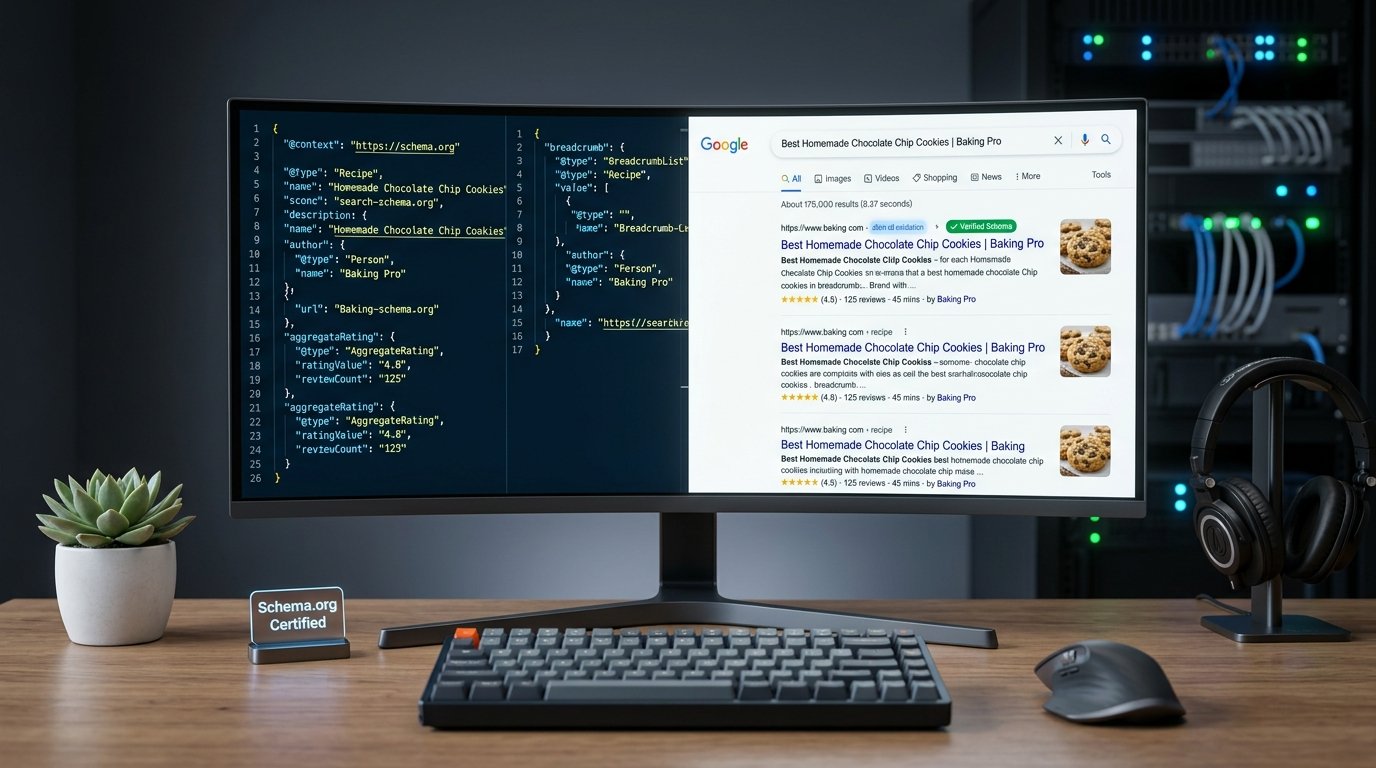
  • How to Implement Schema.org Structured Data with JSON-LD to Win Google Rich Snippets

    How to Implement Schema.org Structured Data with JSON-LD to Win Google Rich Snippets

    Implementing Schema.org structured data using clean JSON-LD scripts is among the most effective technical SEO strategies available. In fact, providing search engine crawlers with explicit semantic context eliminates guesswork and elevates standard search results into eye-catching rich snippets. Furthermore, listings featuring review stars, pricing details, or FAQ accordions achieve substantially higher click-through rates. Therefore, deploying structured data is fundamental to modern digital visibility.

    Why JSON-LD Represents the Industry Standard for Structured Data

    While microdata and RDFa formats embed annotations directly into visible HTML markup, JSON-LD operates inside clean, decoupled script tags in the page header. In fact, Google explicitly recommends JSON-LD as the preferred schema syntax.

    Consequently, developers can maintain and validate schema objects without risking visual layout bugs or HTML parsing errors. This separation of concerns ensures effortless maintenance as site features expand.

    Essential Schema Types for Corporate and E-Commerce Portals

    Every commercial website should deploy foundational schema types. First, implement Organization and LocalBusiness schemas detailing your official corporate name, physical address, phone contact, and social profiles.

    Second, utilize Article and BlogPosting schemas on informational guides to define author credentials, publication timestamps, and featured image assets. Third, deploy Product and Service schemas to showcase commercial offerings directly in SERP snippets.

    Validating Structured Data and Monitoring Rich Results in GSC

    Never deploy schema code to production without thorough technical verification. Utilize Google’s Rich Results Test tool to inspect markup syntax and verify eligibility for enhanced search features.

    Furthermore, monitor the Enhancements report inside Google Search Console to detect and resolve warnings before they impact organic performance. Implementing Schema.org structured data correctly delivers measurable commercial dividends.

    Discover our specialized technical SEO and Schema markup implementation services. In addition, explore our bespoke website design and development solutions.

    Ultimately, structured data builds an explicit communication channel with search engines. By embedding Schema.org structured data throughout your platform, your enterprise commands prominent search real estate and attracts qualified organic visitors.