الوسم: Mobile Apps

  • Mobile App & Web Application Security in KSA | Alkhowatir

    Mobile App & Web Application Security in KSA | Alkhowatir

    Hardening mobile app & web application security is an urgent operational imperative for any Saudi business processing corporate records, customer data, and electronic payments. In fact, overlooking application security exposes enterprises to devastating data breaches, regulatory penalties, and lasting reputational damage. Therefore, robust security practices must be engineered into every layer of software development from initial architecture through deployment.

    Core Defensive Measures for Modern Digital Platforms

    • End-to-End Cryptography (TLS 1.3 & AES-256): Ensuring all data in transit and at rest remains fully encrypted against interception.
    • API Hardening & Multi-Factor Authentication: Implementing token-based authentication and rate limiting to neutralize automated attacks.
    • Regular Penetration Testing: Identifying code-level vulnerabilities in accordance with essential cybersecurity controls formulated by the National Cybersecurity Authority (NCA).
    • Least-Privilege Access Controls: Restricting administrative permissions to verified employees based strictly on functional necessity.

    Discover our specialized cybersecurity coordination and audit readiness solutions for Saudi enterprises.

  • ERP & CRM Integration for Enterprise Apps | Alkhowatir

    ERP & CRM Integration for Enterprise Apps | Alkhowatir

    Implementing seamless ERP & CRM integration between your mobile applications and central management databases unlocks substantial productivity gains and eliminates operational redundancies. In fact, organizations that rely on manual data entry between mobile sales channels and accounting suites suffer frequent clerical errors and delayed order dispatch. Therefore, connecting systems via secure REST APIs ensures instantaneous synchronization across inventory, invoicing, and customer profiles.

    Operational Advantages of Real-Time System Connectivity

    Automated software integration delivers immediate organizational dividends:

    • Real-Time Inventory Synchronization: Prevent overselling by automatically updating stock levels across mobile apps and warehouse management systems.
    • ZATCA E-Invoicing Compliance: Automatic generation of certified tax invoices adhering to Phase 2 integration standards set by the Zakat, Tax and Customs Authority (ZATCA).
    • Accelerated Fulfillment & Lower Overhead: Cut manual order processing cycles by more than 60% while eliminating human entry errors.

    Learn more about our systems architecture and API integration consulting services.

  • Delivery App Development in Saudi Arabia | Alkhowatir

    Delivery App Development in Saudi Arabia | Alkhowatir

    Executing professional delivery app development has become an operational necessity for restaurants, retail chains, and logistics operators across Saudi Arabia. In fact, consumers and corporate procurement teams now demand real-time GPS parcel tracking and instant status notifications on mobile devices. Therefore, owning a dedicated delivery platform grants complete control over customer data and eliminates prohibitive commissions charged by third-party aggregators.

    The Three Essential Pillars of an On-Demand Delivery Ecosystem

    A robust on-demand delivery platform coordinates three synchronous applications:

    1. Customer Ordering Interface: Product browsing, live location pinning via Google Maps, secure digital checkout, and live order status.
    2. Courier / Driver Application: Instant job notifications, turn-by-turn navigation, and digital proof-of-delivery verification.
    3. Central Dispatch Control Portal: Real-time fleet management, automatic job allocation based on proximity, and financial reporting.

    Moreover, on-demand transport and logistics software must comply with operational directives issued by the Transport General Authority (TGA).

    Discover our specialized custom application development and systems advisory capabilities.

  • Mobile App Development Cost in Saudi Arabia | Alkhowatir

    Mobile App Development Cost in Saudi Arabia | Alkhowatir

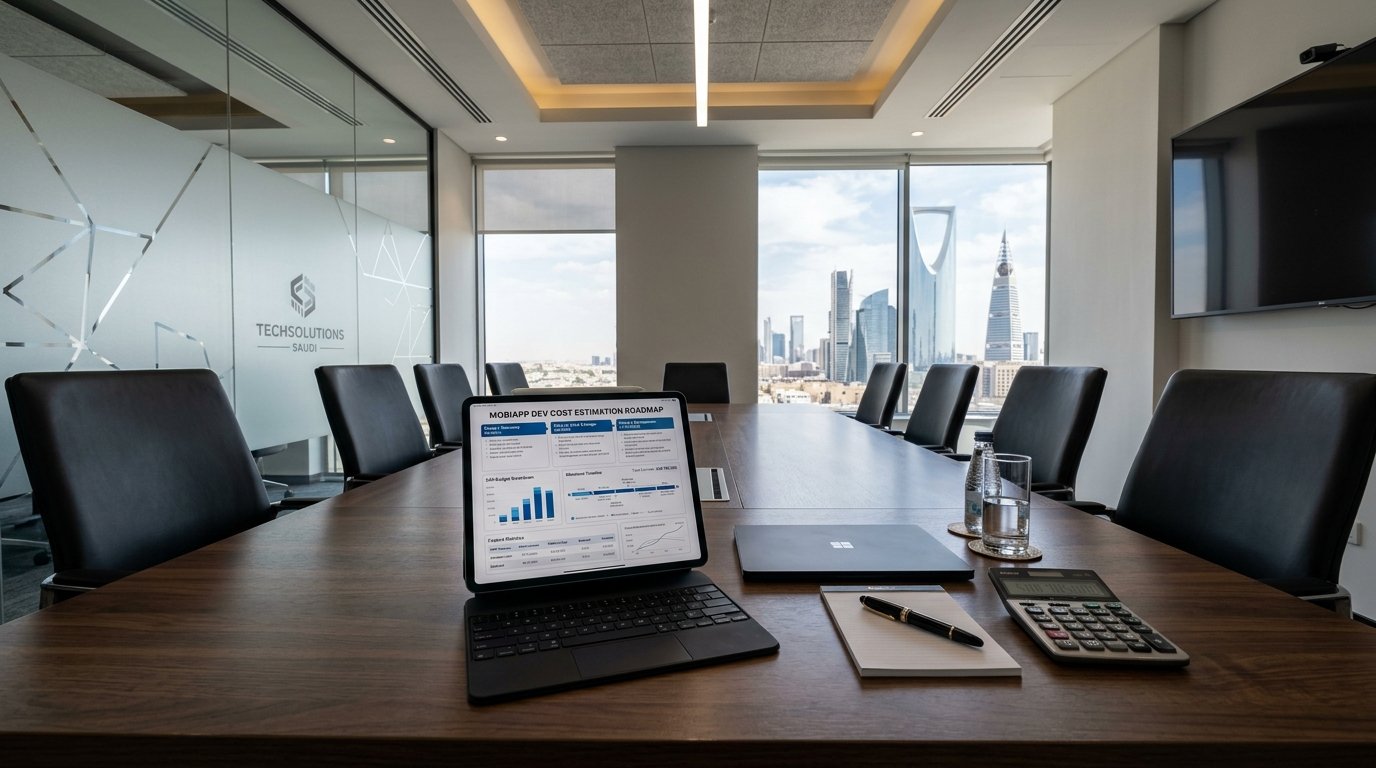
    Understanding mobile app development cost in Saudi Arabia is essential for establishing realistic budgets and avoiding unexpected scope expansion. In fact, app development is not a uniform commodity; costs reflect the complexity of custom features, backend infrastructure, and external API integrations. Therefore, preparing a well-defined requirements document before soliciting developer bids protects your capital and accelerates execution.

    Core Elements That Shape Mobile App Development Budgets

    An enterprise application budget is typically allocated across four primary areas:

    • UI/UX Design & Prototyping: Designing custom wireframes and interactive prototypes to test usability before writing code.
    • Frontend & Cloud Backend Development: Developing application logic alongside cloud-based administration dashboards.
    • Local Payment Gateway Integrations: Integrating verified payment gateways (Mada, Visa, Apple Pay) and SMS verification services.
    • Regulatory Compliance & Data Hosting: Ensuring secure database architecture in line with Communications, Space & Technology Commission (CST) directives.

    Learn more about our structured IT consulting and technical roadmapping for software ventures.

  • Enterprise Mobile App Development in KSA | Alkhowatir

    Enterprise Mobile App Development in KSA | Alkhowatir

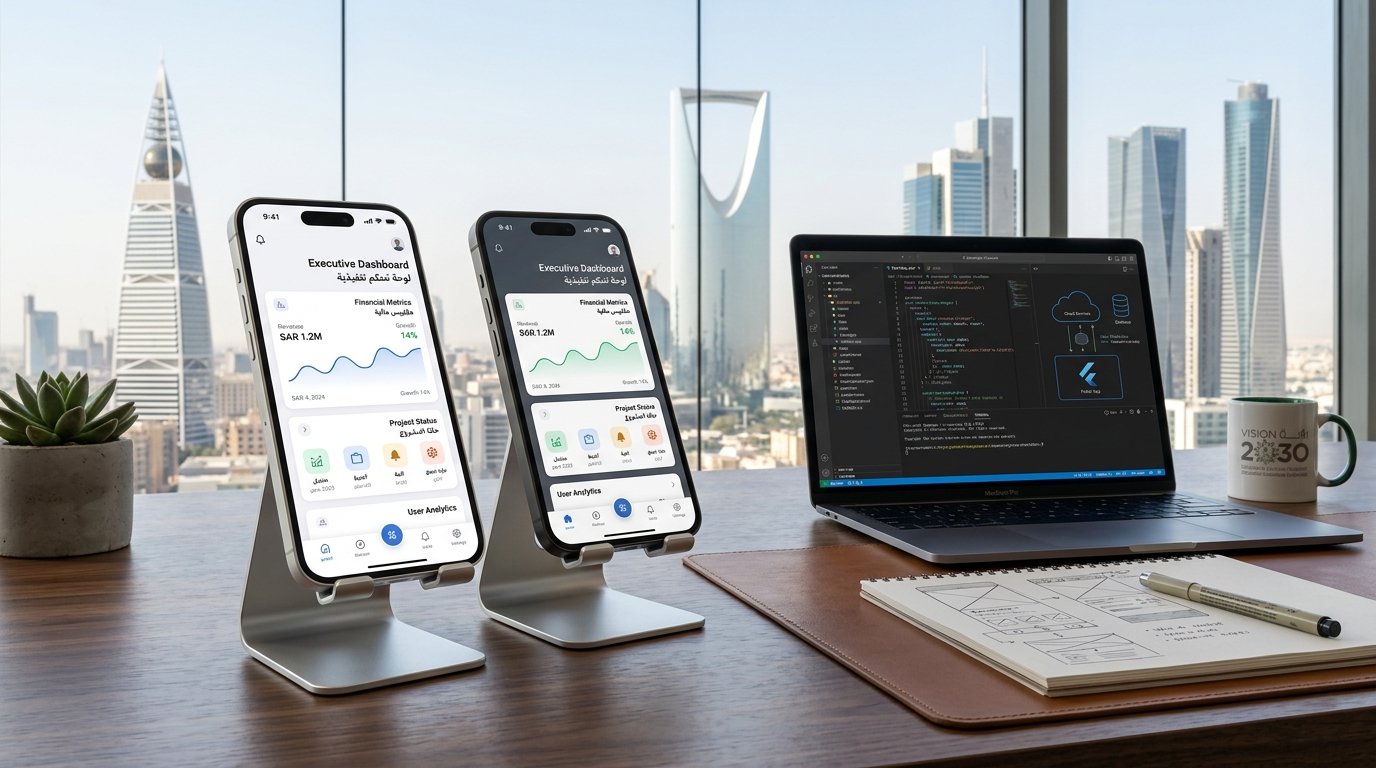
    Commissioning custom mobile app development has become a vital strategic move for Saudi enterprises seeking direct, personalized engagement with corporate clients and consumers. In fact, over 80% of digital transactions in the Kingdom take place via mobile applications on iOS and Android devices. Consequently, deploying a dedicated mobile app provides your enterprise with a direct revenue channel, heightened operational agility, and lasting customer loyalty.

    Key Stages of an Enterprise Mobile App Project

    Delivering a successful corporate mobile application requires disciplined engineering execution:

    1. Requirements Architecture & Feasibility: Defining functional user stories, system workflows, and security requirements.
    2. Bilingual UI/UX Prototyping: Crafting intuitive interfaces tailored specifically to Saudi cultural nuances and user behaviors.
    3. Clean-Code Development (Flutter / Native): Writing scalable, battery-efficient source code for high-performance execution.
    4. Rigorous QA & Security Testing: Validating system performance across multiple screen sizes and auditing for vulnerabilities.
    5. App Store Deployment: Complying with regulatory submission criteria governed by the Apple Developer Network and Google Play Console.

    Discover how our IT consulting and software engineering services turn complex app concepts into reality.

  • Is Smartphone Preference a Left or Right Brain Thing?

    Is Smartphone Preference a Left or Right Brain Thing?

    One perk of being a technology analyst is evaluating the latest mobile devices. A few weeks ago, Samsung sent me its latest premium foldable smartphone, the Galaxy Z Fold8 Ultra.

    After testing it for several weeks, something occurred to me. In fact, given my two decades as a loyal iPhone user, the learning curve on Android was surprisingly challenging.

    When you talk to longtime smartphone users, you often hear the same firm reactions. For example, people frequently say they could never switch platforms. Many people assume this preference stems from left-brain or right-brain dominance. However, modern neuroscience does not support that theory.

    Research has not found evidence that people can be categorized by brain hemisphere dominance. For instance, a major University of Utah study of over 1,000 participants confirmed this reality. Therefore, there is no scientific basis for claiming certain brains are wired for iOS or Android. Instead, user preference is driven by years of learned behavior and digital habit.

    iOS and Android Have Trained Us for Two Decades

    Apple launched the iPhone in 2007, while commercial Android phones arrived in 2008. Consequently, consumers have spent nearly two decades becoming accustomed to one specific operating system.

    That daily repetition matters immensely. Longtime users do not consciously think about navigating their home screens or managing notifications. Their muscle memory takes over automatically. In psychology, this process is known as procedural learning, where repeated behaviors require little conscious thought.

    Furthermore, research on technology adoption emphasizes the power of habits and switching costs. Moving to a new mobile platform requires unlearning familiar behaviors. Because of this, longtime users naturally resist changing operating systems.

    This reality explains why an experienced iPhone user picking up an Android device can feel disoriented. The Android phone performs the task perfectly well. However, it simply does not match the user’s established expectations.

    Familiarity Feels Like Superior Usability

    Over the last twenty years, iOS and Android have created distinct interface patterns. Users master specific gestures, control layouts, and notification styles. Over time, these interactions become virtually invisible.

    Consider driving a car where the accelerator and brake pedals are suddenly reversed. In theory, the car functions normally. However, your immediate reaction would be intense frustration because your mental model no longer applies.

    Ultimately, smartphone loyalty is not about brain wiring. Instead, it reflects deep cognitive habits shaped by years of daily digital interaction—principles that drive modern responsive web design and user experience engineering.

  • How Much Does Mobile App Development Cost in Saudi Arabia? 2026 Enterprise Pricing Guide

    How Much Does Mobile App Development Cost in Saudi Arabia? 2026 Enterprise Pricing Guide

    Determining the realistic mobile app cost in Saudi Arabia is a critical planning milestone for enterprises expanding their digital commerce capabilities. In fact, with smartphone penetration exceeding 95% across the Kingdom, dedicated mobile applications represent powerful revenue generators and client loyalty drivers. Furthermore, development budgets vary substantially based on platform architecture, third-party integrations, and backend scalability. Therefore, analyzing primary pricing variables ensures accurate financial forecasting.

    Architectural Decisions Driving Development Budgets

    Several technical factors dictate the investment required to bring an application to market. First, deciding between native iOS/Android development and cross-platform frameworks (such as Flutter or React Native) represents the primary cost pivot.

    While cross-platform engineering reduces initial development timelines and costs, highly complex applications requiring heavy hardware integration or custom graphics often justify native development. In addition, building secure backend APIs, database schemas, and administrative control panels represents a substantial portion of total engineering effort.

    Realistic Application Pricing Tiers in the Saudi Marketplace

    To provide commercial transparency, mobile app cost in Saudi Arabia generally aligns with three core tiers:

    Standard service or catalog applications typically range between 30,000 SAR and 65,000 SAR. These include user registration, product showcases, booking capabilities, and basic push notifications.

    Advanced commercial platforms featuring Mada payment gateways, real-time GPS tracking, chat systems, and automated dispatch algorithms require investments between 65,000 SAR and 140,000 SAR.

    Complex enterprise applications, fintech solutions, and multi-sided on-demand marketplaces exceed 140,000 SAR, reflecting intensive security auditing, microservice architectures, and compliance certifications.

    Recurring Maintenance, Infrastructure, and Store Compliance

    Budgeting must extend beyond initial deployment. Factor in annual server hosting fees, database maintenance, Apple Developer and Google Play account renewals, and regular OS compatibility updates.

    Proactive post-launch maintenance ensures continuous performance and protects your application against unexpected operating system disruptions.

    Discover our specialized mobile app development and custom web engineering services. Additionally, review our e-commerce platforms and payment gateway solutions.

    In conclusion, building a mobile application requires methodical financial and technical planning. By understanding the true mobile app cost in Saudi Arabia and prioritizing engineering excellence, your business builds an invaluable digital asset for continuous growth.