الوسم: Saudi Market

  • Corporate Social Media Management in KSA | Alkhowatir

    Corporate Social Media Management in KSA | Alkhowatir

    Professional corporate social media management is vital for maintaining an authoritative public presence and actively engaging commercial stakeholders across Saudi Arabia. In fact, executive leaders and procurement specialists in the Kingdom are extraordinarily active on platforms such as X (formerly Twitter) and LinkedIn to discover corporate announcements and partnership opportunities. Therefore, delivering consistent, value-driven communications establishes your brand as an industry thought leader.

    How Strategic Social Media Management Drives Corporate Value

    Systematic social media execution delivers measurable advantages for corporate organizations:

    • Institutional Brand Building: Amplifying project milestones, national event participations, and corporate governance achievements.
    • Targeted B2B Lead Acquisition: Reaching C-level decision-makers through hyper-targeted campaigns via LinkedIn Business Solutions.
    • Stakeholder Communications: Establishing responsive, professional engagement channels that build long-term commercial trust.

    Pair your social media operations with our broader digital systems and IT consulting services.

  • Enterprise Mobile App Development in KSA | Alkhowatir

    Enterprise Mobile App Development in KSA | Alkhowatir

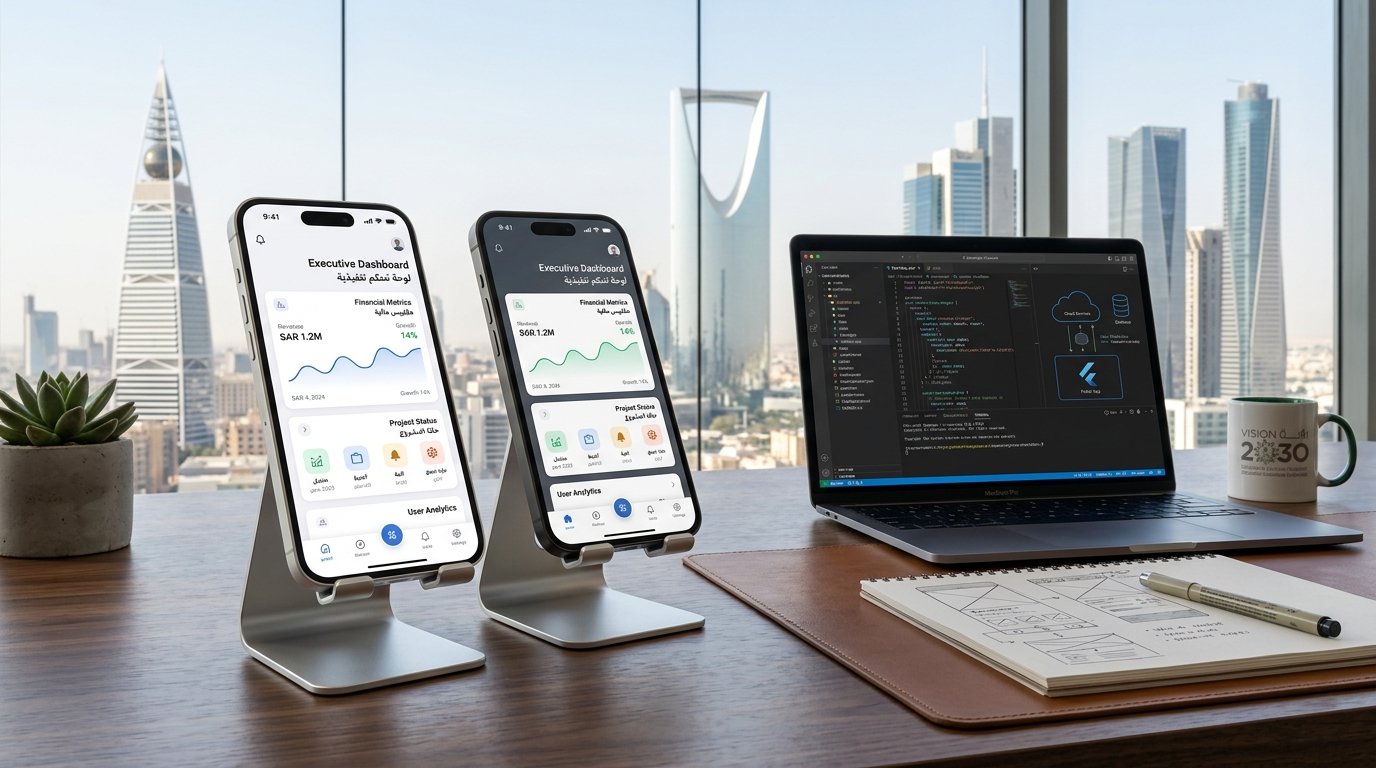
    Commissioning custom mobile app development has become a vital strategic move for Saudi enterprises seeking direct, personalized engagement with corporate clients and consumers. In fact, over 80% of digital transactions in the Kingdom take place via mobile applications on iOS and Android devices. Consequently, deploying a dedicated mobile app provides your enterprise with a direct revenue channel, heightened operational agility, and lasting customer loyalty.

    Key Stages of an Enterprise Mobile App Project

    Delivering a successful corporate mobile application requires disciplined engineering execution:

    1. Requirements Architecture & Feasibility: Defining functional user stories, system workflows, and security requirements.
    2. Bilingual UI/UX Prototyping: Crafting intuitive interfaces tailored specifically to Saudi cultural nuances and user behaviors.
    3. Clean-Code Development (Flutter / Native): Writing scalable, battery-efficient source code for high-performance execution.
    4. Rigorous QA & Security Testing: Validating system performance across multiple screen sizes and auditing for vulnerabilities.
    5. App Store Deployment: Complying with regulatory submission criteria governed by the Apple Developer Network and Google Play Console.

    Discover how our IT consulting and software engineering services turn complex app concepts into reality.

  • Website Design Cost in Saudi Arabia: 2026 Budgeting and Pricing Guide

    Website Design Cost in Saudi Arabia: 2026 Budgeting and Pricing Guide

    Evaluating website design cost in Saudi Arabia requires understanding the specific technical architecture and regulatory integrations required for commercial success. In fact, modern corporate websites in the Kingdom must satisfy robust compliance standards regarding consumer data protection and electronic invoicing. Furthermore, integrating seamless local payment channels directly influences project engineering and budgetary requirements. Therefore, forward-thinking enterprises prioritize tailored software solutions over rigid commercial templates to secure superior returns on investment.

    Key Factors Defining Website Design Cost in Saudi Arabia

    The total investment for enterprise web development depends directly on several technical variables. Specifically, these critical components define project pricing:

    • Architectural Scope and UI/UX Complexity: Engineering bespoke bilingual interfaces with dedicated Arabic (RTL) and English (LTR) typography requires sophisticated frontend precision.
    • Saudi Payment Gateway Integrations: Implementing certified payment processors supporting Mada debit cards, Apple Pay, and local credit facilities.
    • ZATCA Phase 2 E-Invoicing Connectivity: Building automated API synchronization with the Zakat, Tax and Customs Authority (ZATCA) platform.
    • Local Cloud Infrastructure & Compliance: Deploying on verified Saudi cloud data centers in compliance with national Personal Data Protection Law (PDPL) requirements.

    Project Categories and Website Design Cost Tiers

    Commercial web initiatives generally align with specific functional tiers that reflect organizational objectives. Consequently, projects can be categorized into four distinct levels:

    • Corporate Brand Showcase: Tailored for emerging ventures requiring high-authority brand positioning, responsive design, and validated lead generation forms.
    • Enterprise SME Portals: Engineered for expanding businesses demanding multi-tier service catalogs, dynamic blog architecture, and search optimization.
    • Full-Scale E-Commerce Solutions: Platforms requiring multi-warehouse inventory synchronizations, automated shipping webhooks, and secure checkout funnels.
    • Bespoke Enterprise Web Applications: Custom architectures providing deep REST API connectivity with enterprise ERP and CRM databases.

    Transparent Pricing and Engineering Governance

    At Alkhowatir, we implement transparent, scope-based pricing where solutions are tailored upon request. Consequently, this bespoke approach guarantees that your investment delivers measurable performance without hidden maintenance liabilities. Moreover, our structured development process ensures strict adherence to cybersecurity benchmarks.

    Discover our specialized bespoke corporate web design and development capabilities. Furthermore, review our transparent digital solutions and pricing tiers to plan your enterprise roadmap.

    Related Reading

  • Corporate Website Design in Saudi Arabia | Alkhowatir

    Corporate Website Design in Saudi Arabia | Alkhowatir

    Investing in professional corporate website design is the foundational imperative for establishing digital authority and institutional trust in Saudi Arabia. Indeed, government entities, industrial procurers, and corporate clients expect a high-performance digital presence before entering formal contracts. Consequently, operating with an outdated or slow website compromises your brand reputation and forfeits lucrative commercial opportunities.

    Why Saudi Enterprises Need Custom Web Architecture

    Saudi Arabia’s business landscape is undergoing rapid digital modernization under Vision 2030. Therefore, generic web templates no longer satisfy the expectations of enterprise clients. Instead, corporate leaders require bespoke web platforms that showcase verified credentials, executive case studies, and official certifications. Furthermore, national digital initiatives spearheaded by Small and Medium Enterprises General Authority (Monsha’at) actively encourage enterprises to adopt world-class digital platforms to accelerate commercial growth.

    Key Standards for High-Performing Corporate Websites

    • Native RTL Arabic & LTR English Parity: Flawless visual hierarchy and typographic balance across both language systems.
    • Sub-Two-Second Page Delivery: Rapid loading across Saudi 5G networks to minimize bounce rates and maximize engagement.
    • Cybersecurity and Privacy Compliance: Full alignment with national personal data protection regulations (PDPL).
    • Direct Lead Generation Pathways: Prominent quotation forms and instant WhatsApp Business integration for immediate inquiries.

    In addition, our specialized web design and development services provide Saudi businesses with end-to-end engineering excellence.

  • Arabic-First UX Design: Building High-Converting Portals for Saudi Decision-Makers

    Arabic-First UX Design: Building High-Converting Portals for Saudi Decision-Makers

    Implementing genuine Arabic-First UX design is essential for organizations expanding across the Kingdom of Saudi Arabia. Therefore, building portals tailored to regional executive expectations demands structural parity, bidirectional layouts, and optimized digital performance.

    Engineering high-performance bilingual web portals for Saudi decision-makers

    Why Superficial Localization Fails with Enterprise Buyers

    Flipping an English stylesheet with a simple direction: rtl rule creates severe visual defects. Furthermore, automated translation tools fail to capture the dignified tone required in Saudi B2B commerce. Consequently, corporate procurement directors quickly lose confidence in vendors whose portals appear poorly adapted.

    The Four Engineering Pillars of Bidirectional Portals

    1. CSS Logical Properties for Seamless Fluidity

    Modern layouts replace legacy directional properties with logical alternatives such as margin-inline-start and padding-inline-end. In addition, this modern standard eliminates duplicate stylesheets across Arabic and English pages. Therefore, page weight drops significantly while Core Web Vitals improve.

    2. Dynamic Arabic Typography and Line Spacing

    Arabic scripts possess distinct vertical loops and ascending markers that differ fundamentally from Latin fonts. Consequently, designers must maintain proportional line heights between 1.6 and 1.8 to prevent visual clipping. Moreover, verified font optimization guidelines published by the W3C Internationalization Working Group highlight the importance of native text flow.

    3. Controlled Iconography and Visual Flow

    While progress bars and navigation arrows must mirror in right-to-left mode, universal symbols like search lenses and cameras must remain unmirrored. Furthermore, maintaining visual hierarchy ensures intuitive navigation for regional buyers. As a result, users complete inquiries without cognitive friction.

    4. Mobile-First Optimization for Fast B2B Workflows

    Over 85% of regional enterprise decision-makers evaluate prospective partners on handheld devices during busy workdays. Therefore, high-converting platforms convert dense desktop tables into swipeable cards and frictionless inquiry steps. Consequently, spontaneous mobile visits translate directly into verified RFQs.

    Driving Commercial Velocity Through Design Integrity

    A corporate portal functions as an automated sales engine rather than a static brochure. Therefore, investing in deliberate Arabic-First UX design builds instant credibility with government entities, industrial conglomerates, and enterprise partners across Riyadh, Dammam, and Al Khobar.

    The team at Alkhowatir Al-Jazira delivers comprehensive solutions through our web design services and website redesign solutions, built to high conversion standards. Contact us today for a technical consultation.

  • Aramco & SABIC Contractor IT Readiness: How to Pass Cybersecurity Audits Seamlessly

    Aramco & SABIC Contractor IT Readiness: How to Pass Cybersecurity Audits Seamlessly

    Achieving Aramco contractor IT readiness is now a mandatory milestone for industrial suppliers across the Kingdom of Saudi Arabia. Therefore, compliance with the Third Party Cybersecurity Standard (SACS-002) is essential to qualify for major energy contracts.

    Comprehensive Aramco contractor IT readiness framework for Saudi industrial vendors

    Why Aramco Contractor IT Readiness Dictates Procurement Success

    Modern industrial supply chains operate in deeply interconnected digital environments. Consequently, energy operators view contractor workstations and cloud services as critical extensions of their own perimeter. Furthermore, an unpatched vulnerability in vendor systems could jeopardize vital energy infrastructure. As a result, procurement officers rigorously inspect cybersecurity compliance before awarding major tenders.

    The Four Pillars of Contractor Cybersecurity Compliance

    1. Multi-Factor Authentication and Network Segregation

    Enterprise guidelines require multi-factor authentication across all remote access portals and administrative tools. In addition, sensitive project networks must remain strictly isolated from public office Wi-Fi. Therefore, unauthorized lateral movement is prevented throughout the corporate infrastructure.

    2. Domain-Authenticated Corporate Communications

    Procurement departments routinely disqualify bids submitted through generic public webmail services. Consequently, contractors must implement domain-branded corporate email backed by strict SPF, DKIM, and DMARC enforcement. Moreover, authenticated communication protects commercial invoices from sophisticated email spoofing attacks.

    3. Endpoint Detection and Vulnerability Hygiene

    Every operational device must maintain managed Endpoint Detection and Response software. In addition, IT managers must document systematic patch management cycles consistent with national guidance from the National Cybersecurity Authority (NCA). Consequently, critical operating system vulnerabilities are resolved before audits begin.

    4. Air-Gapped Backups and Disaster Recovery Drills

    Contractors must maintain regular, encrypted backups of critical project data. Furthermore, preserving an immutable copy disconnected from the primary network defends against modern ransomware threats. As a result, businesses can recover quickly without catastrophic operational downtime.

    Securing Long-Term Vendor Prequalification

    Achieving full compliance requires proactive preparation and structured technical remediation. Therefore, running a pre-audit gap assessment accelerates formal approval while preventing expensive bid disqualifications. Ultimately, proven Aramco contractor IT readiness builds enduring trust with major industrial operators across Jubail, Dammam, and Al Khobar.

    The team at Alkhowatir Al-Jazira delivers specialized guidance through our contractor readiness services and cybersecurity coordination solutions for Aramco and SABIC contractors in the Eastern Province. Contact us today to schedule a technical readiness consultation.

  • Is Artificial Intelligence Out of Control? Global Calls for Responsible AI Governance

    Is Artificial Intelligence Out of Control? Global Calls for Responsible AI Governance

    As autonomous technologies reshape industries, many technologists and business leaders question whether artificial intelligence out of control represents a genuine systemic threat or premature alarmism. In fact, rapid breakthroughs in generative models, agentic workflows, and automated reasoning have outpaced traditional regulatory oversight. Furthermore, international bodies and ethical researchers are calling for verifiable safety guardrails. Therefore, examining the technical realities and governance models of modern AI is essential.

    The Acceleration of Autonomous Machine Intelligence

    Recent developments in large neural architectures have surpassed initial capability expectations. In fact, modern systems can independently write complex software code, generate hyper-realistic media, and orchestrate business operations with minimal human intervention.

    Consequently, researchers express legitimate concerns regarding alignment drift and hallucinated algorithmic reasoning. When automated agents make unverified high-stakes financial or legal decisions, technical risk escalates rapidly.

    Global Regulatory Frameworks and Enterprise Compliance

    In response to concerns about artificial intelligence out of control, sovereign governments are establishing binding regulatory frameworks. In Saudi Arabia, the Saudi Data and Artificial Intelligence Authority (SDAIA) actively champions ethical AI principles and responsible innovation guidelines aligned with Saudi Vision 2030.

    These frameworks mandate algorithmic transparency, bias mitigation, and strict data privacy protections. Ensuring human-in-the-loop oversight across critical workflows guarantees that automated tools remain accountable and benevolent.

    Practical AI Integration in Enterprise Software Engineering

    For forward-thinking organizations, the imperative is not to halt innovation, but to implement artificial intelligence within disciplined boundaries. In modern web engineering, AI accelerates code prototyping, automated testing, and dynamic content personalization.

    However, mission-critical systems must always undergo rigorous human peer review and deterministic verification before production deployment.

    Discover our specialized custom software engineering and AI-assisted development services. Additionally, explore our technical SEO and digital marketing solutions.

    In conclusion, technological progress requires ethical stewardship. By embracing responsible governance and verifiable safety standards, enterprises ensure that artificial intelligence out of control remains a solved challenge rather than an existential crisis.

  • Aramco CCC Gap Analysis Guide: How Eastern Province Contractors Avoid Audit Delays

    Aramco CCC Gap Analysis Guide: How Eastern Province Contractors Avoid Audit Delays

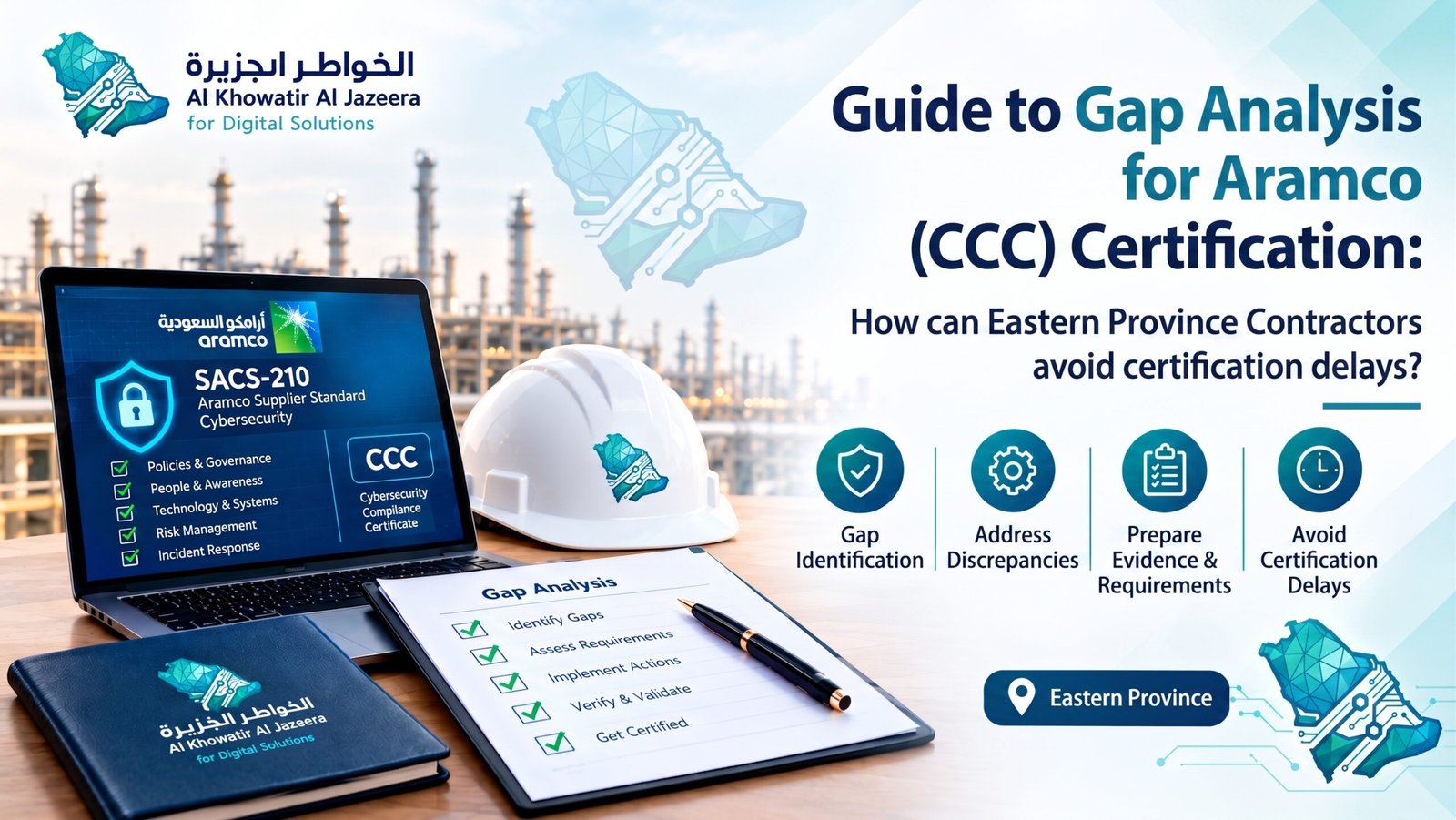
    In the Eastern Province—specifically across Jubail, Dammam, and Khobar—securing the Aramco Cybersecurity Compliance Certificate (CCC) is an absolute operational requirement. Consequently, valid certification is mandatory to bid on contracts and participate in major energy projects.

    Under the revised SACS-210 standard, audit requirements have become substantially more stringent. Therefore, attempting an audit without rigorous gap analysis frequently leads to costly delays. In addition, failed assessments can disrupt ongoing operations for months.

    1. What Is an Aramco SACS-210 Gap Analysis?

    A gap analysis is an exhaustive diagnostic review comparing your existing security controls against Aramco’s framework. As a result, this evaluation uncovers technical vulnerabilities before external auditors arrive. Furthermore, early detection provides ample time to rectify deficiencies calmly and systematically.

    2. Why Contractors Fail Initial Audits

    Field experience shows that audit delays stem from predictable technical oversights. For example, missing documented evidence and unverified system logs represent the most frequent audit findings.

    Moreover, inadequate access controls and weak encryption policies trigger immediate non-compliance notices. In contrast, accredited third-party evaluators require concrete proof of daily technical enforcement.

    3. Practical Methodology for Compliance

    Achieving SACS-210 certification requires a disciplined four-stage implementation strategy:

    • Step 1 (Scoping): Accurately inventory every workstation, server, and network device connecting to Aramco data. Specifically, incorrect scoping causes the majority of assessment delays.
    • Step 2 (Control Assessment): Review firewall configurations, endpoint protection, and encryption protocols. In addition, ensure your organization utilizes secure official domain email architecture.
    • Step 3 (Evidence Collection): Gather genuine audit logs and automated vulnerability scan reports. Consequently, the credibility of your documentation determines your assessment score.
    • Step 4 (Remediation Plan): Formulate an actionable roadmap to address identified gaps before scheduled third-party auditing.

    4. Strengthening Commercial E-E-A-T and Market Trust

    In B2B industrial contracting, cybersecurity compliance functions as a powerful trust accelerator. Therefore, certified contractors enjoy distinct competitive advantages during major vendor selections.

    Ultimately, verified compliance demonstrates proven operational resilience. As a result, your organization establishes itself as a preferred supplier for top-tier energy operators.

  • The Strategic Power of Corporate Visual Identity: Why Branding Is Your Premier Investment

    The Strategic Power of Corporate Visual Identity: Why Branding Is Your Premier Investment

    Developing a cohesive corporate visual identity is among the most consequential strategic investments an organization can make. In fact, in an era of saturated digital marketplaces, a company’s visual language communicates its values, professionalism, and industry stature before a single word is read. Furthermore, consistent branding across web portals, social platforms, and physical collateral commands premium market pricing. Therefore, engineering an enduring visual identity drives long-term commercial success.

    The Psychology of First Impressions and Brand Recognition

    Human perception processes visual stimuli thousands of times faster than written text. Consequently, your logo, typography palette, and color harmony establish an immediate psychological anchor in prospective clients’ minds.

    A thoughtfully engineered corporate visual identity projects stability, competence, and reliability. In contrast, inconsistent visual presentations create cognitive dissonance, leading prospective buyers to question your operational maturity.

    Bilingual Typography and Cultural Resonance in Saudi Arabia

    In the Saudi market, successful branding requires sophisticated cultural fluency. A truly effective visual identity harmonizes modern Arabic calligraphy with refined Latin typography, creating visual balance across RTL and LTR mediums.

    Moreover, selecting color palettes that honor local heritage while projecting international corporate leadership positions your brand authentically within Saudi Arabia’s dynamic Vision 2030 commercial landscape.

    Extending Visual Identity Across Digital Interfaces and UI/UX

    A brand guide is incomplete if it remains confined to static PDF manuals. In contemporary web development, your visual identity must translate into dynamic, responsive design tokens.

    Standardizing interactive button states, fluid typography clamps, and card elevations ensures that users experience identical elegance across all digital touchpoints.

    Explore our bespoke brand design and corporate web development services. Additionally, discover our Saudi domain registration and digital identity solutions.

    In conclusion, brand identity is not a decorative luxury; it is a vital commercial asset. By establishing a powerful corporate visual identity, your enterprise builds lasting consumer loyalty and undisputed market prestige.

  • How Much Does Mobile App Development Cost in Saudi Arabia? 2026 Enterprise Pricing Guide

    How Much Does Mobile App Development Cost in Saudi Arabia? 2026 Enterprise Pricing Guide

    Determining the realistic mobile app cost in Saudi Arabia is a critical planning milestone for enterprises expanding their digital commerce capabilities. In fact, with smartphone penetration exceeding 95% across the Kingdom, dedicated mobile applications represent powerful revenue generators and client loyalty drivers. Furthermore, development budgets vary substantially based on platform architecture, third-party integrations, and backend scalability. Therefore, analyzing primary pricing variables ensures accurate financial forecasting.

    Architectural Decisions Driving Development Budgets

    Several technical factors dictate the investment required to bring an application to market. First, deciding between native iOS/Android development and cross-platform frameworks (such as Flutter or React Native) represents the primary cost pivot.

    While cross-platform engineering reduces initial development timelines and costs, highly complex applications requiring heavy hardware integration or custom graphics often justify native development. In addition, building secure backend APIs, database schemas, and administrative control panels represents a substantial portion of total engineering effort.

    Realistic Application Pricing Tiers in the Saudi Marketplace

    To provide commercial transparency, mobile app cost in Saudi Arabia generally aligns with three core tiers:

    Standard service or catalog applications typically range between 30,000 SAR and 65,000 SAR. These include user registration, product showcases, booking capabilities, and basic push notifications.

    Advanced commercial platforms featuring Mada payment gateways, real-time GPS tracking, chat systems, and automated dispatch algorithms require investments between 65,000 SAR and 140,000 SAR.

    Complex enterprise applications, fintech solutions, and multi-sided on-demand marketplaces exceed 140,000 SAR, reflecting intensive security auditing, microservice architectures, and compliance certifications.

    Recurring Maintenance, Infrastructure, and Store Compliance

    Budgeting must extend beyond initial deployment. Factor in annual server hosting fees, database maintenance, Apple Developer and Google Play account renewals, and regular OS compatibility updates.

    Proactive post-launch maintenance ensures continuous performance and protects your application against unexpected operating system disruptions.

    Discover our specialized mobile app development and custom web engineering services. Additionally, review our e-commerce platforms and payment gateway solutions.

    In conclusion, building a mobile application requires methodical financial and technical planning. By understanding the true mobile app cost in Saudi Arabia and prioritizing engineering excellence, your business builds an invaluable digital asset for continuous growth.